In Houston, Tier 1 safety includes what most national guides skip entirely: emergency power for medical devices, a written heat-emergency plan for August outages, and hurricane-season protocols. A senior alone in a Houston home without AC during a multi-day outage is a real and preventable risk.
Texas has specific funding mechanisms worth knowing: the community property step-up in basis affects how home equity is calculated, Lady Bird Deeds affect how the home can be used as collateral, and the Medicaid income-cap rule affects what funding strategies are available if Medicaid is in the picture.
In Houston, home equity is often the largest single asset available for funding modifications or care. Three paths exist: keep the home and use equity (HECM, HELOC), sell and fund, or a hybrid approach. The right path depends on the care timeline, the Medicaid picture, and what the family actually needs the money to do.
The national guide covers the full framework. The Houston edition adds Texas-specific context throughout — the content is the same, the application is local.
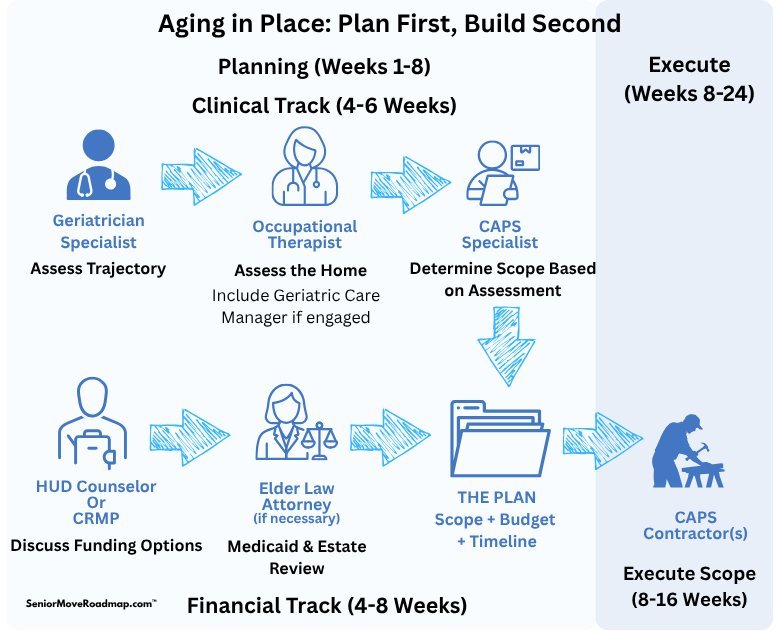
If aging in place is the plan, the legal and financial foundation matters as much as the grab bars. The Texas planning guides cover what Houston families need to have in order — powers of attorney, Medicaid basics, and who handles what when something is missing.
Texas Planning Resources →If the honest limits are starting to show, the Houston edition has the same guide as the national. And when the home needs to move, there are three options — not just one.
Help with the Home — Houston →Each section of this guide has a dedicated page with the full detail — the numbers, the framework, the professional roster. Start with whichever one matches where you are right now.
This is informational guidance, not legal, medical, or financial advice. The right professional matters — and every section of this system tells you who that is.